Ryan Bolden Consulting / Sacramento
Book 30 minutes

Sheet 02 / For the owner

The phonerings less.Here is why.

You ran a good business for years. Then the way people find one changed again, and this time nobody told you. This page shows every shift, what it did to the ones who waited, and what we do about the newest one.

A 30-minute phone call with Ryan. Never more than four times a day are offered, so pick early.

  • 1,505,556lines of application code we wrote and maintain
  • 38repositories under management
  • 14live properties we run and scan monthly
best plumber near me

Here are three well-reviewed options near you:

  1. 14.9, 212 reviews
  2. 24.8, 167 reviews
  3. 34.7, 98 reviews

Your business: not mentioned.

What a customer sees in 2026. The names are hidden; the pattern is the point.

Two minutes, no sign-up

See what the AI says about you today.

Type your website. Our scanner reads your site the way the engines do, asks them about your trade, and tells you whether you are one of the names. The same software we run on our own 14 properties.

Takes one to two minutes. We store the domain, your email and the score, nothing else. No charge.

Seven shifts, thirty years

You lived every one of these.

SEO is the old trade of being found by a search engine. An answer engine writes one answer instead of listing ten links, and that is the newest shift. Each time, the way customers found a business moved. The ones who moved early got the calls cheap. The ones who waited paid more, or disappeared from view. Here is the pattern, with the receipts.

    1 / 7
    Welcome to our Home Page!

    We are a family business serving the greater Sacramento area since 1978.
    Call us during business hours or send us e-mail.

    You are visitor number 000142
    UNDER CONSTRUCTION
    Best viewed in Netscape Navigator 2.0
    1995. Having a page at all made you modern.

    The website

    Being online was a novelty. Amazon opened on July 16, 1995 and sold $12,000 of books in its first week. Most owners shrugged. At the end of 2000, a Gallup survey for Verizon found only 27% of small businesses had a website.

    The phone book still worked, so why bother? The answer came slowly, then all at once. Print directory references fell from 15.1 billion in 2002 to 13.4 billion in 2006, and the two biggest Yellow Pages publishers filed for bankruptcy in 2009: Idearc in March and R.H. Donnelley in May.

    27%of small businesses had a website at the end of 2000. Gallup for Verizon. By 2024 the SBA put it at 73%.

    Who waited
    The print directories and everyone who bought only their ads. Idearc and R.H. Donnelley were bankrupt by 2009 (filings).
    Who moved
    A bookstore with no store. Amazon, 1995 (HistoryLink).
    SHOPMy cart (0)
    Cordless Drill Kit, 18V
    In stock. Ships in 1-2 days.
    Add to cart
    Secure checkout
    2000. The store moved into the browser.

    Selling online

    Then the register moved. In the last quarter of 2000, online sales were about 1% of US retail. By the last quarter of 2010 it was 4.3%. In the second quarter of 2026 it was 17.1%, or $340 billion.

    Some of the biggest names in retail decided the web was someone else's job. Borders handed its whole online store to Amazon in April 2001. Toys "R" Us did the same in August 2000. Blockbuster passed on buying Netflix for $50 million in 2000 (Fortune).

    17.1%of US retail sales were online in the second quarter of 2026. US Census Bureau. It was 1% in 2000.

    Who waited
    Blockbuster, bankrupt 2010 (Bloomberg). Borders, liquidated 2011 (Law360). Toys "R" Us, bankrupt 2017 (Fortune).
    Who moved
    Domino's rebuilt itself as a digital company. From 2010 its stock beat all but three of about 2,300 listed companies (Quartz).
    Open now · 4.8 · 1.2 mi
    2005. "Near me" became a place on a map.

    The map

    Google Maps arrived on February 8, 2005. The business listing on it changed names four times: Google Places in 2010, Google My Business in 2014, Google Business Profile in 2021. The pin mattered more than the name.

    By 2011, Pew found 47% of adults used the internet to learn about local businesses, against 30% for the newspaper. Google reported "near me" searches on phones up 136% in a year by 2016. A shop with no pin was three blocks away and invisible.

    136%one-year growth in "near me" searches on phones, March 2016. Google.

    Who waited
    Owners who never claimed the free listing. Today the Google Business Profile is the single most-cited source in local AI answers, at 28.63% of citations (BrightLocal).
    Who moved
    Owners who claimed the pin, set the hours and asked for reviews while it was free and uncrowded (Pew, 2011).
    plumber rocklin ca
    1. Rocklin Plumbing Co.
    2. 24-Hour Drain Service
    3. Placer Rooter & Repair
    4. …
    5. Result 10
    2010. Page one, or nowhere.

    Page one

    Search became the front door. Pew measured daily search use jumping from 30% to 41% of internet users in a single year, 2005. Google still handles 89.94% of searches worldwide as of September 2026.

    The math of page one was brutal. Across 12.2 million queries, the first result took 27.6% of clicks, the tenth 2.7%, and page two 0.63%. Google's Panda update of February 2011 and Penguin of April 2012 punished thin pages and bought links. SEO stopped being a trick and became a trade.

    0.63%of clicks go to page two. Backlinko, 12.2 million queries.

    Who waited
    Anyone who bought links or spun pages. Penguin, April 2012 (Google).
    Who moved
    Owners who wrote one honest page per real service and city. Those pages are still the ones AI answers cite today, with websites in 42% to 93% of local answers (BrightLocal).
    emergency plumber
    1. AdFast Plumbing Pros
    2. AdSame-Day Drain Co.
    3. AdValley Rooter
    4. AdA1 Plumbing
    Your pagebelow the fold
    2012. The top of the page went up for auction.

    Paying to be seen

    Google's self-service ads launched on October 23, 2000 with a $50 minimum. In 2001 Google's entire business was $86.4 million a year. Early advertisers bought clicks for pennies in an auction almost nobody had joined.

    In 2025 Google sold $294.7 billion of ads, and its average price per click rose 7%. A small business now pays about $5.42 every time someone clicks a search ad. The free top of the page became the paid top of the page, and the price only goes one way once the crowd arrives.

    $294.7Bof Google advertising in 2025, from $86.4 million in 2001. Alphabet 10-K, Google S-1.

    Who waited
    Everyone who joined after the crowd. They pay the 2025 price per click, up 7% in a year (Alphabet 10-K).
    Who moved
    Advertisers in the 2002 auction, when Google introduced pay-per-click pricing (Google press release).
    Rocklin Plumbing Co.Posted a photo
    Free reach
    Not mobile-friendly
    2015. The customer was now holding a phone.

    Social, and the phone in the pocket

    Facebook launched Pages for businesses on November 6, 2007; 100,000 were created that day, free. In 2012 a Page post reached about 16% of its fans for free. By early 2014 it was 6.5%, and about 2% for the biggest Pages. Facebook's own explanation, in 2014: “it's becoming harder for any story to gain exposure” (Facebook for Business).

    The same year, the device changed. On April 21, 2015 Google began ranking mobile-friendly pages higher on phones. Sites built for a desk dropped. Instagram added business profiles in May 2016, and the free channel narrowed again as the paid one grew.

    2%free reach for large Pages by 2014, down from 16% in 2012. HubSpot, citing EdgeRank Checker and Social@Ogilvy.

    Who waited
    Every site that was not readable on a phone on April 21, 2015 (Google), and every Page that counted on free reach.
    Who moved
    Best Buy. Customers were using their phones to price-check in its aisles, so it made price-matching permanent in March 2013 (Bloomberg).
    Who is a good plumber near Rocklin?

    Based on reviews and recent mentions, three options stand out:

    Sources: 15 pages read. 2 were business websites.

    Not named: you.
    2023 onward. The customer asks, and gets an answer, not a list.

    The answer

    ChatGPT arrived on November 30, 2022. By March 2026 OpenAI counted more than 900 million weekly users. Google put AI Overviews on top of search in May 2024; by May 2026 they reached 2.5 billion people a month. Gartner predicted in 2024 that traditional search volume would fall 25% by 2026.

    This shift is different in one way. There is no page two, and often no page one. When an AI summary appears, people click a result 8% of the time, against 15% without one. A local answer names about two to four businesses. You are one of them, or you are not in the conversation.

    2.5Bpeople a month see Google's AI Overviews, May 2026. Google I/O 2026.

    Who waits
    Kodak built a digital camera in 1975 and filed for bankruptcy in 2012 (Bloomberg). Seeing a shift coming is not the same as moving. Sears filed in 2018 (Fox Business).
    Who moves
    Businesses the engines can read, verify and quote. The work is listed below, and our own sites are the first proof (what gets cited).

    Same word, different engines

    SEO, GEO, AEO. What is actually different.

    You will hear all three. They overlap more than the people selling them admit. Here is the honest split.

    SEOGEOAEO
    Stands forSearch engine optimizationGenerative engine optimizationAnswer engine optimization
    SinceLate 1990sA 2023 research paper coined itFeatured snippets and voice answers, 2010s (Search Engine Land)
    The prizeA high link on a page of tenBeing named or cited inside a written answerBeing the one direct answer to a direct question
    Who decidesA ranking formulaA model that reads pages, reviews and mentions, then writesThe same engines, picking one clear statement
    What winsRelevant pages, links, speed, mobileBeing readable to crawlers, stated plainly, and talked about by othersShort, exact answers to the question as people ask it
    Same work?Mostly. Google's own guide says optimizing for AI search "is still SEO". The difference is the goal and how you measure it: one of ten links, or one of the two to four names said out loud.

    The engines read what others say about you more than what you say about yourself. That is the part most owners have never been told.

    What we do about it

    Seven steps, in this order.

    The order matters. Each step makes the next one count. We built software to do the measurable parts and we run it on our own sites first.

    1. 01

      Read your site the way a machine does

      We fetch your pages as the crawlers do. Many sites block them without knowing. Two of our own domains blocked AI crawlers at the edge by default, invisible in any settings page, until our scanner caught it.

    2. 02

      Say plainly who you are

      What you do, where, for whom, hours, prices, and the questions you answer on the phone every day, written as sentences a machine can lift.

    3. 03

      Give the machines your identity card

      Structured data behind the page: business, services, hours, area. Only 3.97% of pages carry a local business record. Yours will.

    4. 04

      Claim every listing

      Google Business Profile, Bing, Apple. The profile is the most-cited local source in AI answers at 28.63% of citations.

    5. 05

      Get talked about

      Reviews, directories, local press, forums. The engines weigh what others say above what you say. We set up the ask so it happens every week without you.

    6. 06

      Answer the real questions

      One page per question your customers actually ask, in their words, with your answer first. No filler, no city-swapped copies.

    7. 07

      Ask the engines every month

      We ask ChatGPT, Gemini, Perplexity and Google your customers' question and send you the answer, named competitors and all. Not a score. The answer.

    We ran it on ourselves first

    Our scanner scored our own 14 properties before any fix. riscent.com scored 3 out of 100: every crawler was stuck in a login loop no browser ever saw. After the fix it scored 96. ryanbolden.com went from 65 to 95 in one afternoon, once we turned off a default edge setting that was returning 403 to GPTBot and ClaudeBot. Those were our mistakes, found by our own software, and the same software now runs for clients.

    • 3 → 96riscent.com
    • 65 → 95ryanbolden.com
    • 14properties scanned monthly

    What we have built

    Five live products. Real complexity, measured.

    Every number below was counted from the code on October 8, 2026, not estimated. Across all our work that is 1,505,556 lines of application code in 38 repositories, and more than 2 million lines once you count the configuration and documentation that keep it running. The same hands do the client work.

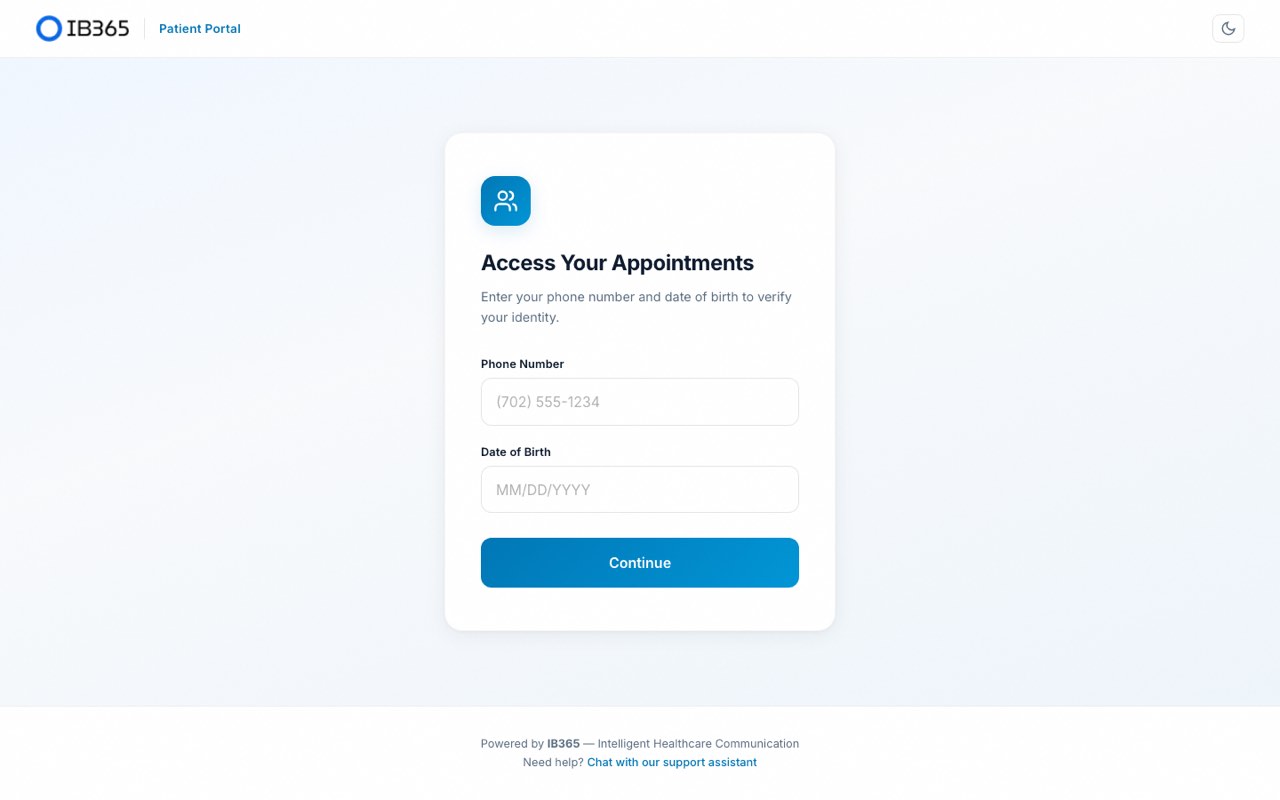
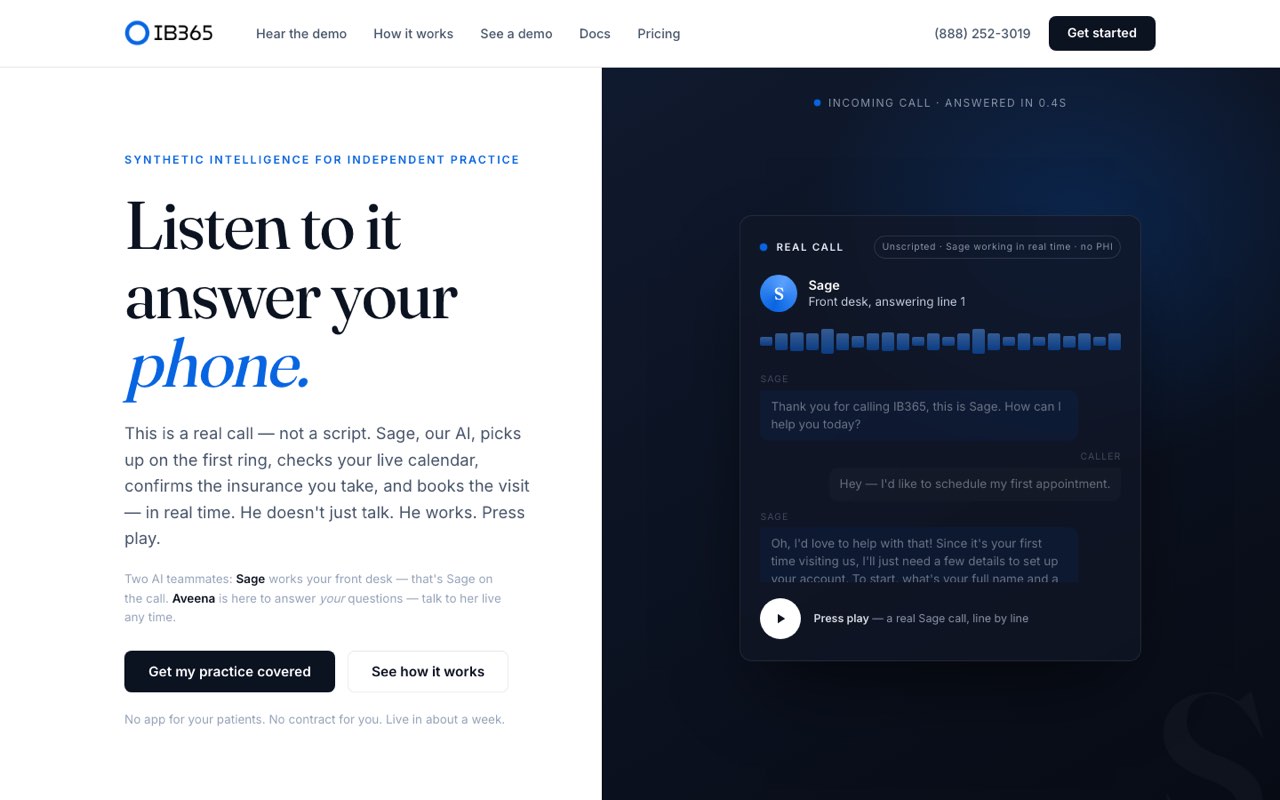
    IB365 practice platform

    Healthcare · live since 2025

    IB365 ib365.ai

    The operating system for a medical practice. AI phone agents answer every call in English and Spanish, book on the practice calendar, write the note into the CRM, text the patient, and bill the practice per call. One codebase runs the front desk, the records, the money and the phones.

    • 340,276lines of code
    • 98API routes
    • 169database tables
    • 191test files
    • 9vendor integrations

    ElevenLabs voice · Vonage and Twilio telephony · Stripe billing · Tebra EHR · Clerk auth · Resend · Anthropic and Gemini models

    MyCare patient portal

    Healthcare · patient-facing

    MyCare mycare.ib365.ai

    The patient's side of IB365: a portal and a widget any practice website can embed. Appointments, messages, intake, insurance and billing, all reading and writing the same records the phones use.

    • 2,028lines in the app shell
    • 1shared record with IB365

    Next.js · Prisma · embeddable widget · the IB365 API behind it

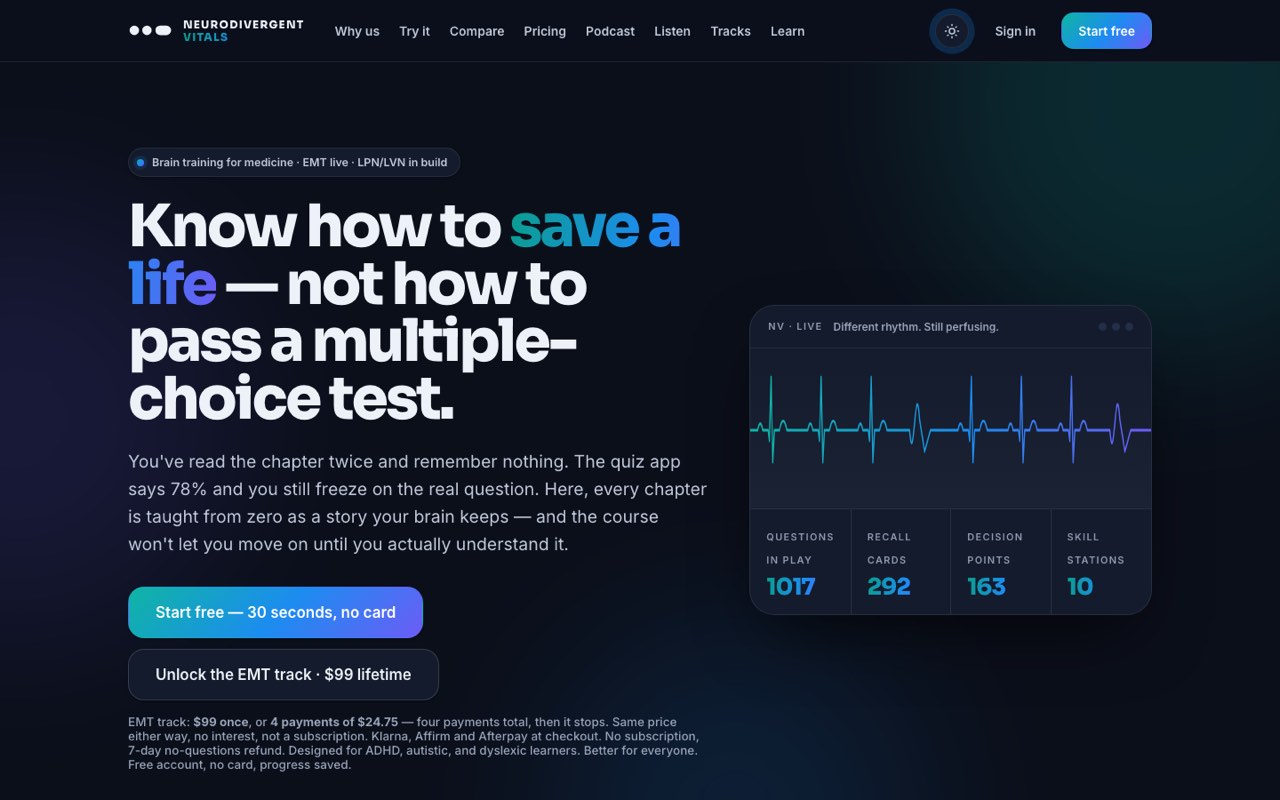
    Neurodivergent Vitals course web app

    Education · subscription

    Neurodivergent Vitals neurodivergentvitals.com

    A course web app for EMT and allied-health exam prep. Lesson engine, spoken audio course, progress tracking, accounts, yearly checkout, a job finder that refreshes itself every morning, and content gated behind membership at the edge.

    • 18,781lines of code
    • 19database tables
    • 4vendor integrations

    Cloudflare Workers and D1 · ElevenLabs audio · Stripe · Clerk · Resend

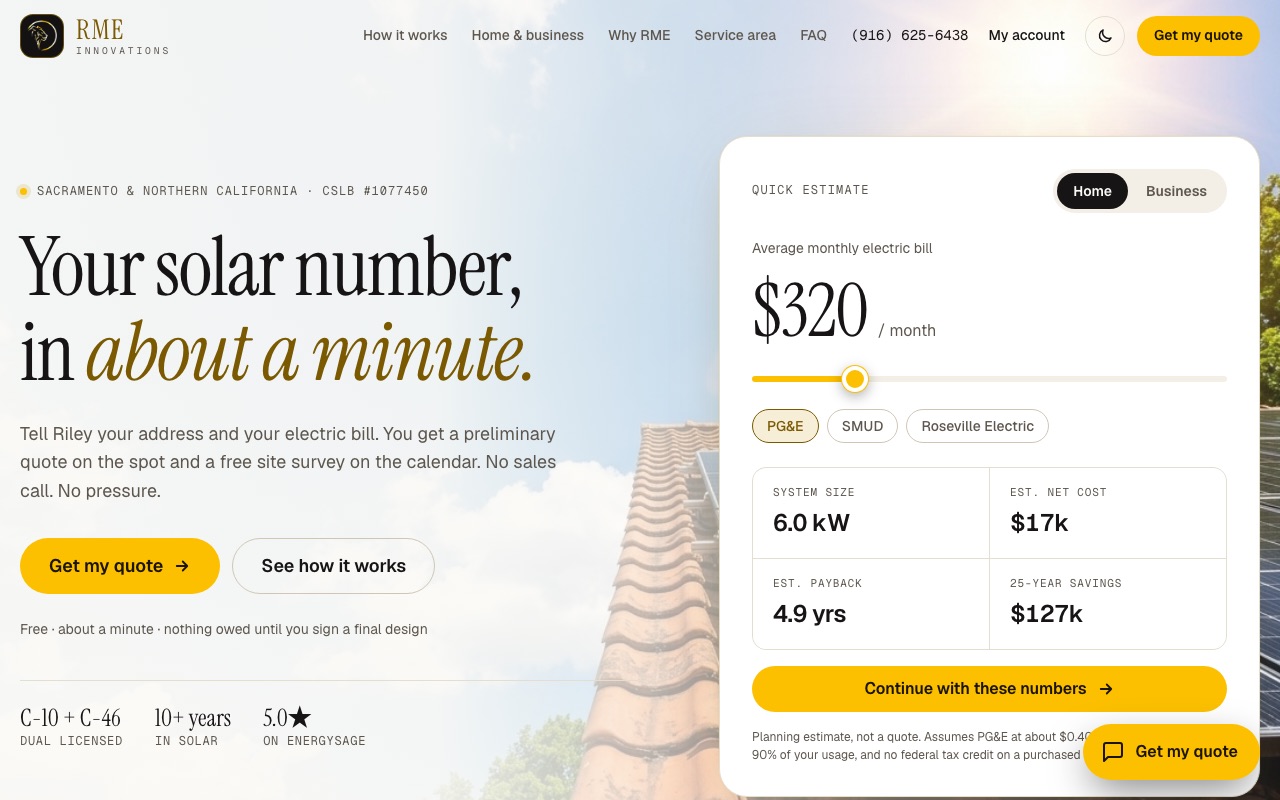
    RME Solar quoting site

    Solar · client build, 2026

    RME Solar rme.solar

    A solar company's whole front end in one chat. The agent takes an address, pulls the aerial photo, finds the utility and its real rate for the ZIP code, sizes the system, prices it, requests the engineering design, books the site survey, opens a customer account and reads the uploaded power bill. The owner gets a front desk with the funnel, the drop-offs and every lead.

    • 7,843lines of code
    • 25API routes
    • 20database tables
    • 38,585ZIP codes with utility rates
    • 1,194utilities priced

    Artemis design API · Gemini · US Census geocoder · USGS aerial imagery · OpenEI and EIA rate data · Resend

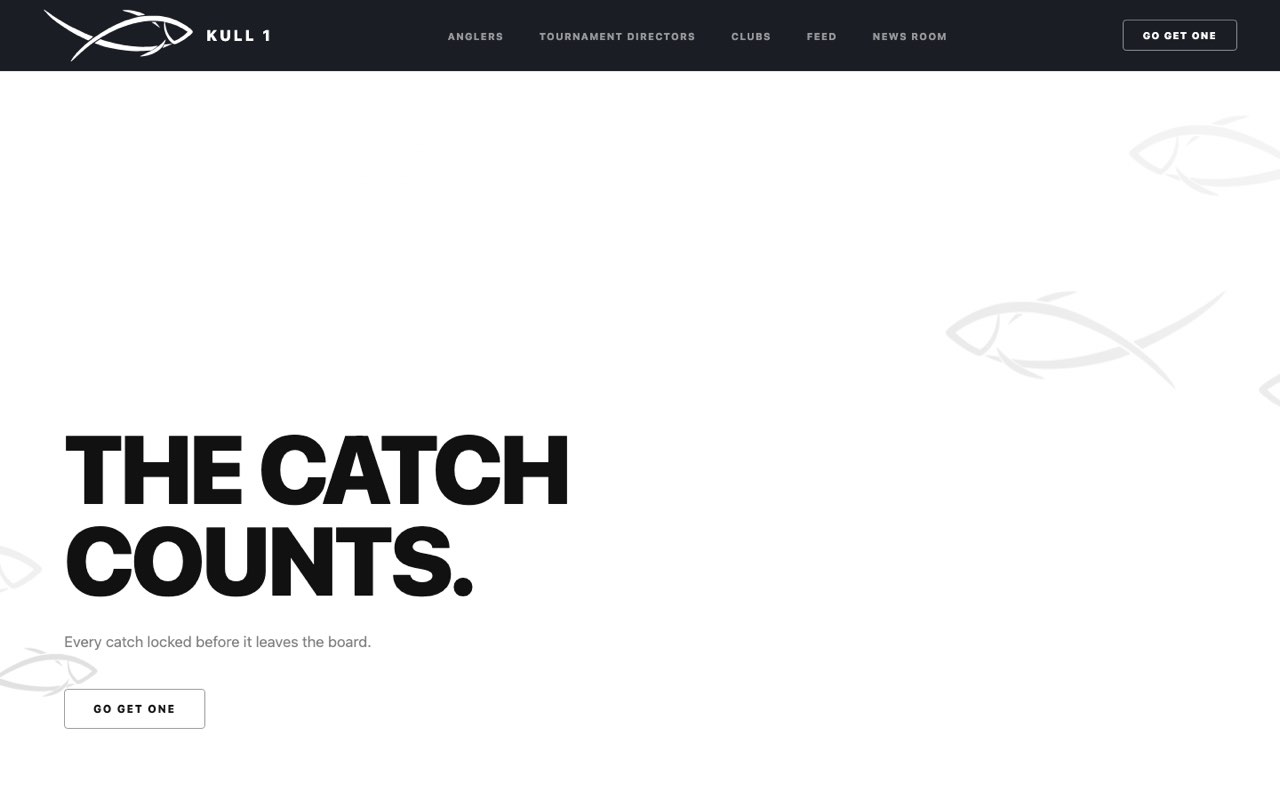
    KULL 1 tournament platform

    Sport · community

    KULL 1 kull1.com

    A fishing tournament platform: tournaments, clubs, entries, catch photos and weigh-ins, leaderboards, and a magazine of articles on how tournaments work, regulations and safety.

    • 11,884lines of code
    • 1payment integration

    Stripe · leaderboards · clubs · photo verification

    30 minutes with Ryan

    Pick a time. Ryan calls you.

    A phone call, 30 minutes, nothing to install. Before the call he asks the AI engines your customers' question. On the call he reads you the answer. Ryan keeps four openings a day for these calls, and they go.

    Checking Ryan's calendar…

    Rather talk now? Call (916) 518-8057. It is answered around the clock and can book the same calendar.

    Questions

    What owners ask first.

    What happens in the 30 minutes?
    Ryan calls you at the time you picked. Before the call he asks the AI engines your customers' question, and he reads you the answer. Then you decide together whether there is work worth doing. No slides.
    Is this SEO?
    It includes it. Google says optimizing for AI search is still SEO. The difference is the goal: not a link on a page of ten, but being one of the two to four names an answer says out loud.
    Do I need a new website?
    Usually not. Most of the work is making the site you have readable to machines, saying plainly what you do and where, and fixing listings and reviews. We tell you if the site itself is the problem.
    How long before anything changes?
    Crawl and listing fixes show within days to weeks. Being named in AI answers depends on reviews and third-party mentions, which take months. We re-check every month and show you the answers, not a score.
    What does it cost?
    The 30-minute call costs nothing. Any work after it is quoted in writing before anything starts.
    Who does the work?
    Ryan Bolden, in Sacramento, with the software his studio built for its own 14 properties. You deal with one person.

    Read more: why the phone rings less · what GEO means for a local business · how to be named by ChatGPT in Sacramento · the facts.